

Baumann Lecture
Clinical gait and movement analysis is an established tool for objectively describing movement. In specialised centres, it is routinely used not only for research purposes, but also in clinical practice. But not yet in general. In the field of neuromotor disorders, gait analysis is an integral part of the treatment regimen. However, for other gait disorders, it is often only used as a tool for scientific work. It is rarely used as an additional dynamic examination option in everyday clinical practice. Using examples, the presentation will show where clinical gait analysis can be used and where we have learned from studies that gait analysis results influence our treatment and are not merely “documented”. New technologies, such as markerless capturing, can help us to increase acceptance of motion analysis, enabling it to be used more widely. However, we need to communicate where the limits and possibilities lie. In line with the congress theme “Crossing Borders”, the presentation aims to show where the connection between science and clinical application lies and where we need to work harder on the transfer.
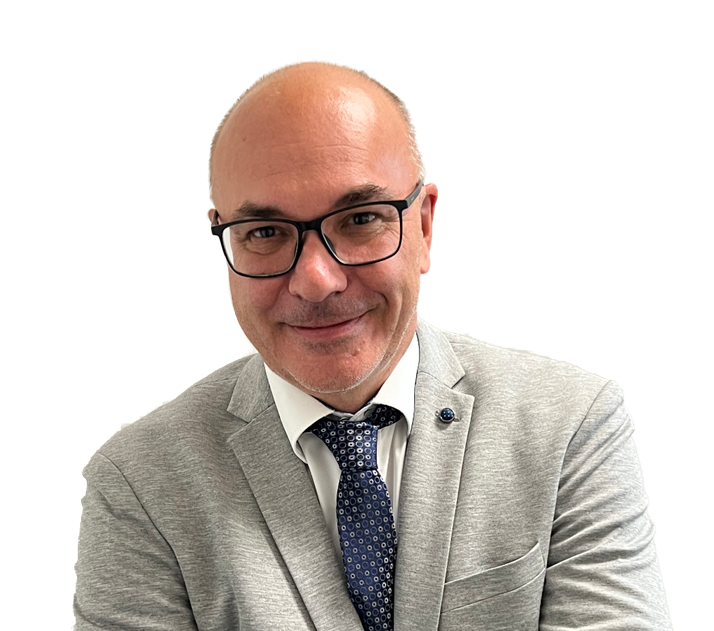
Andreas Kranzl
Orthopaedic Hospital Speising, Laboratory for Gait and Movement Analysis, Vienna, Austria
Click here to see short Biography
Since 1994, Andreas has been working in the field of clinical gait analysis. Since 1996, he’s been head of the gait analysis laboratory at Vienna’s orthopaedic hospital, Speising. He also tutors at several universities (Institution for Sport Science – University of Vienna, TU Vienna, FH Campus Vienna, FH St. Pölten, Danube University Krems) and gives lectures and various exercises. His research focuses on orthopaedic and neuro-orthopaedic gait problems. He was also the local organiser for the 2011 International Congress of the European Scientific Society for Clinical Gait and Movement Analysis (ESMAC) in Vienna. He’s involved in the German-speaking society GAMMA and was on the Board for a long time.